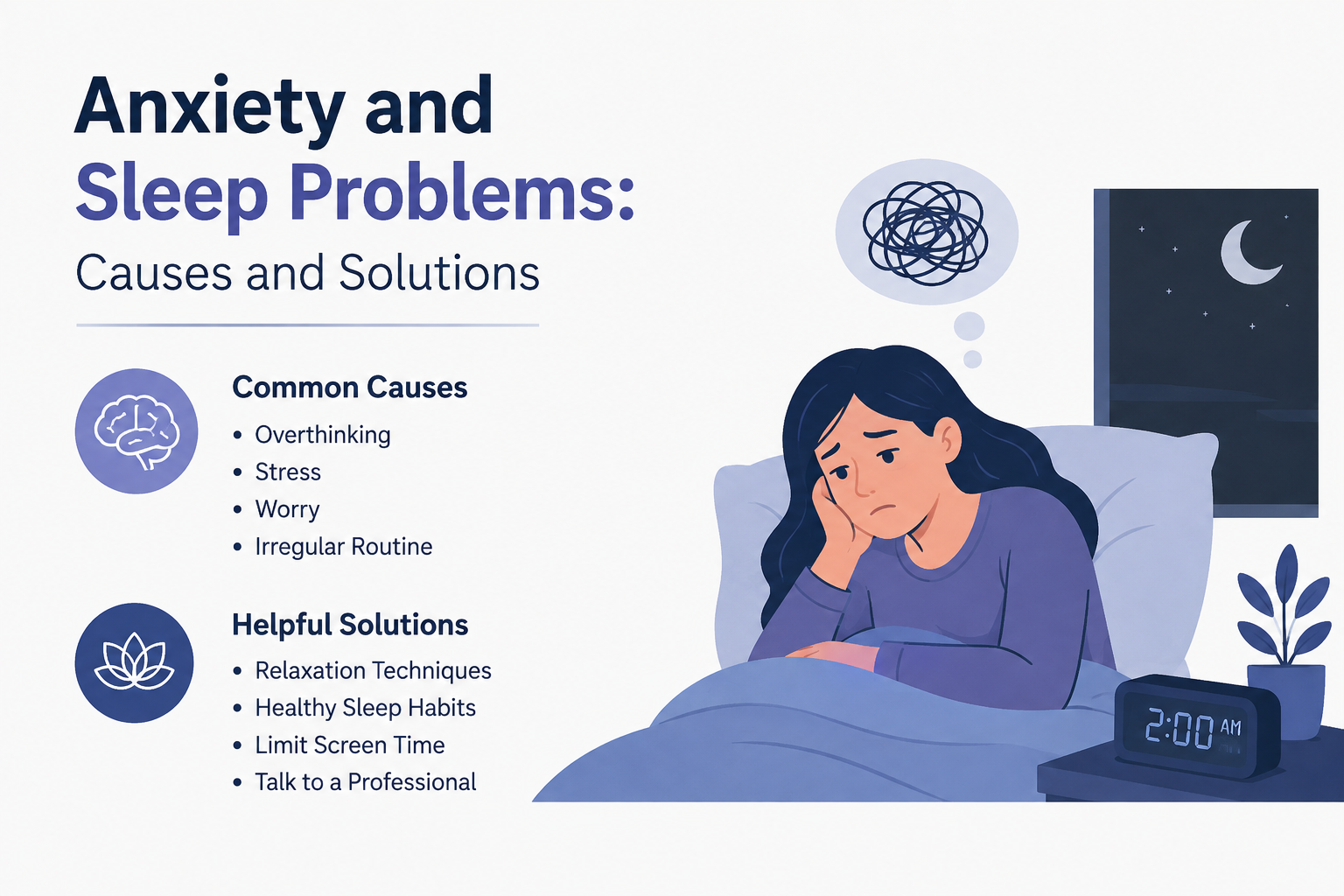
Anxiety and Sleep Problems: Causes and Solutions
A restless night can leave you feeling exhausted the next day. But when anxious thoughts repeatedly keep you awake, the relationship between anxiety and sleep problems can become a difficult cycle: anxiety makes it harder to sleep, and poor sleep can make anxiety feel even stronger.
Occasional stress is a normal part of life. However, persistent anxiety combined with ongoing sleep difficulties can affect concentration, mood, energy, relationships, and everyday functioning. Understanding why this happens is the first step toward breaking the cycle.
How Are Anxiety and Sleep Connected?
Anxiety activates the body's stress response. When you are worried, your brain may remain alert even when your body needs rest. You might replay conversations, think about tomorrow's responsibilities, anticipate negative outcomes, or simply feel unable to "switch off."
At night, there are fewer distractions, which can make these thoughts seem louder.
This can lead to:
Difficulty falling asleep
Frequent nighttime awakenings
Waking earlier than intended
Racing thoughts at bedtime
Restlessness or muscle tension
Feeling unrefreshed after sleeping
Worrying about not getting enough sleep
The problem can become self-reinforcing. You may start going to bed thinking, "What if I can't sleep tonight?" That fear itself can increase alertness and make falling asleep more difficult.
Common Causes of Anxiety-Related Sleep Problems
Anxiety and insomnia can have several overlapping causes. Identifying your individual triggers can make it easier to find an effective solution.
1. Racing Thoughts
One of the most common problems is an active mind at bedtime. Instead of relaxing, you may spend hours thinking about work, finances, relationships, health, or unfinished tasks.
Writing down concerns before bed can sometimes help move them out of your head and onto paper.
2. Chronic Stress
Long periods of stress can keep the nervous system in a heightened state of alertness. Even when the original stressful event has passed, your body may continue responding as though it needs to remain prepared.
3. Irregular Sleep Schedules
Going to bed and waking up at dramatically different times can interfere with your body's sleep-wake rhythm. A consistent schedule can help reinforce when your body should become sleepy.
4. Caffeine and Other Stimulants
Coffee, energy drinks, tea, nicotine, and some medications can contribute to nighttime alertness. Sensitivity varies considerably between individuals.
If sleep is a problem, consider discussing your caffeine intake and medications with a healthcare professional rather than making medication changes on your own.
5. Excessive Screen Time
Phones, computers, and television can keep the brain engaged when you are trying to wind down. Late-night news, social media, work messages, or emotionally stimulating content can be particularly unhelpful for someone already experiencing anxiety.
6. Underlying Sleep or Mental Health Conditions
Anxiety isn't always the only explanation for poor sleep. Conditions such as depression, sleep apnea, restless legs syndrome, chronic pain, or other medical problems can also interfere with sleep.
Persistent symptoms deserve professional evaluation.
Signs That Anxiety May Be Affecting Your Sleep
Not every bad night indicates an anxiety disorder. However, anxiety may be playing a role when you regularly experience:
Worry that becomes stronger at bedtime
A racing heartbeat when trying to sleep
Muscle tension or restlessness
Repeatedly checking the clock
Fear about the consequences of not sleeping
Difficulty relaxing despite feeling physically tired
Daytime fatigue following poor sleep
Irritability or difficulty concentrating
Keeping a simple sleep diary can help you identify patterns, such as whether difficult days consistently lead to worse nights.
Practical Ways to Reduce Anxiety Before Bed
Create a Wind-Down Routine
Instead of moving directly from work, gaming, social media, or household responsibilities into bed, give yourself some transition time.
Try creating a calming routine that may include:
Taking a warm shower
Reading something relaxing
Gentle stretching
Listening to quiet music
Practicing slow breathing
Writing tomorrow's to-do list
The goal isn't to force yourself to fall asleep. It is to give your brain signals that the active part of the day is ending.
Keep Your Sleep Schedule Consistent
Try to wake up at approximately the same time each morning, including weekends when practical.
Consistency can help strengthen your body's circadian rhythm and make sleepiness more predictable.
Make Your Bedroom Sleep-Friendly
Your environment can make a surprising difference.
Keep the bedroom:
Comfortable and relatively cool
Dark enough for sleep
Quiet or consistently sound-controlled
Primarily associated with sleep and relaxation
If your mattress, pillows, temperature, or lighting are consistently uncomfortable, addressing those factors may help.
Try Relaxation Techniques
Slow breathing and progressive muscle relaxation can help reduce physical tension.
For example, spend several minutes breathing slowly and comfortably while deliberately relaxing your shoulders, jaw, hands, and other tense areas.
The objective is relaxation—not achieving perfect breathing or forcing sleep.
Avoid Watching the Clock
Repeatedly checking the time can increase anxiety about how many hours remain before morning.
If you find yourself calculating "I only have five hours left" or "I need to fall asleep right now," consider turning the clock away from view.
Give Your Worries a Scheduled Time
If your mind becomes overwhelmed with worries at bedtime, try setting aside 10–15 minutes earlier in the evening for a "worry period."
Write down:
What is worrying you
Whether you can do anything about it
One practical action you can take tomorrow
This can prevent bedtime from becoming the primary time your brain processes every concern.
What If You Can't Fall Asleep?
Trying harder to sleep can sometimes make sleep more difficult.
If you remain awake and become increasingly frustrated, getting out of bed for a quiet activity in dim lighting may be helpful. Return to bed when you feel sleepy again.
This approach can help prevent your brain from learning that the bed is a place for worrying and struggling to sleep.
Can Better Sleep Reduce Anxiety?
For some people, improving sleep can make anxiety easier to manage. Adequate sleep supports emotional regulation, attention, decision-making, and resilience to everyday stress.
However, sleep improvement should not be viewed as a replacement for treatment when someone has significant anxiety.
If anxiety is persistent or interfering with everyday life, a healthcare professional can help determine whether counseling, cognitive behavioral therapy, medication, lifestyle changes, or a combination of approaches may be appropriate.
Cognitive Behavioral Therapy for Insomnia
Cognitive behavioral therapy for insomnia (CBT-I) is a structured treatment designed specifically for persistent insomnia. It addresses behaviors and thought patterns that can maintain sleep difficulties.
For people whose anxiety and insomnia reinforce each other, addressing both the anxiety and the sleep problem may be particularly useful.
The National Institute of Mental Health provides information about anxiety disorders and available treatment approaches, while the National Heart, Lung, and Blood Institute provides educational resources about sleep and sleep disorders.
When Should You Talk to a Doctor?
Consider speaking with a healthcare professional if sleep problems:
Continue for weeks or repeatedly return
Interfere with work, school, or relationships
Leave you excessively tired during the day
Occur alongside significant anxiety or depression
Are accompanied by loud snoring, gasping, or breathing interruptions
Lead you to rely regularly on alcohol or medication to sleep
A clinician can help determine whether anxiety is the main contributor or whether another condition could be affecting your sleep.
If you are considering prescription sleep or anxiety medication, don't start, stop, or change the dose without medical guidance. Some medications can cause dependence, withdrawal symptoms, excessive sedation, or interactions with other substances.
The Bottom Line
Anxiety and sleep problems often feed into one another. Worry can make the brain more alert at night, while inadequate sleep can make everyday stress feel harder to manage.
Rather than trying to force yourself to sleep, focus on creating conditions that support relaxation: maintain a consistent sleep schedule, reduce stimulating activities before bed, manage worries earlier in the evening, create a comfortable sleep environment, and seek professional help when symptoms persist.
One difficult night doesn't mean something is seriously wrong. But if anxiety and poor sleep have become a recurring part of your life, addressing the pattern early can make it easier to regain restful nights and more manageable days.
FAQs
Can anxiety cause insomnia?
Yes. Anxiety can contribute to difficulty falling asleep, frequent awakenings, and restless or unrefreshing sleep.
Why does anxiety feel worse at night?
Nighttime often provides fewer distractions, giving anxious thoughts more opportunity to occupy your attention. Fatigue can also make worries feel more difficult to manage.
Should I stay in bed if I can't sleep?
If you are awake and becoming increasingly frustrated, getting up briefly for a quiet, relaxing activity and returning when sleepy can be preferable to spending a long period associating the bed with worry.
Can lack of sleep cause anxiety?
Poor sleep can increase emotional reactivity and make stress harder to handle. In some people, persistent sleep deprivation can contribute to worsening anxiety symptoms.
When should anxiety-related sleep problems be treated?
If anxiety or sleep difficulties persist, repeatedly interfere with daily life, or significantly affect your mood and functioning, speak with a qualified healthcare professional.